
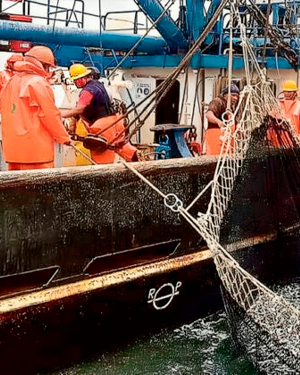
Fernando Moreno Lesevic, former president of the Tuna Chamber, details the work of shipyards and their contribution to Peru's fishing economy.
In recent years, foreign vessels have been an important source for the Peruvian economy, making squid and cuttlefish fishing a crucial link to Asian markets. Currently, the Peruvian artisanal fleet is estimated to consist of over 18,000 vessels. In 2018, aware of the widespread illegality and informality, the Ministry of Production created a System for the Formalization of Artisanal Fishing (Siforpa), to which 4,854 vessels were registered.
The PERU-SIMA agreement (Industrial Marine Services) has the permits to produce modern fishing vessels that enhance the industry and exports of the Peruvian market, generating GPS rental services to comply with entry and port operation guidelines while respecting satellite control to prevent piracy.
Our Peruvian coastline is home to countless marine species, not all of which are part of local or foreign fishing. This is where foreign vessels come into play, engaging in pot fishing activities outside the Peruvian coastline. Fernando Moreno, advisor to the Chinese pot fleet, clarifies that these vessels do not fish within Peruvian waters but rather at the limits of the 200-mile zone. He also explains the main functions of shipyards and all the details regarding the permits and benefits that Peruvian fishing will gain through foreign vessels.
What are shipyards?
Just as there are auto repair shops, shipyards are where boats are repaired and constructed, based on approved plans, purchased plans, or plans developed by the shipyard itself.
In the case of SIMA Callao, it has a very important naval engineering department that has built several vessels, including some for the Navy, and they currently have four patrol boats in development, if I'm not mistaken. In the case of Mayolo in Callao, it mainly focuses on repairs, although they have built some ships; recently, they launched a new vessel, a Vasa ship, built 100% in the shipyard.
What role do shipyards play in the Peruvian coastline, and what benefits do they generate for the economy?
Yes, it is essential and strategic, as having a ship repair facility in the middle of the country is absolutely vital. There are artisanal shipyards, so to speak, for wooden boats, and there is a developing shipyard in Piura, Paita, called Andesa.
Is the entry of foreign vessels into Peru depleting the national coastline, particularly in anchovy, squid, and cuttlefish fishing?
In the case of Chinese squid fishing vessels, it is absolutely false. Chinese coastal vessels fish beyond the 220-230 mile mark because they don’t want to take any risks near the 200-mile limit. The squid at that distance is not necessarily headed for the Peruvian coast; it simply follows its course in the Pacific. Regarding tuna vessels, the Peruvian government also grants licenses. Currently, we can only discuss tuna vessels fishing within Peru. These vessels catch tuna under Peruvian permission, with a license that requires a specific fee paid to the Ministry of Production per boat, and they are also obligated to sell 30% of their catch.
Is the Chancay megaport the most important mega project in the country?
The Chancay megaport will be operational in stages. What I mean is that it will initially focus solely on mining for the first five years. The issue of cabotage will be introduced; cabotage refers to the transport of cargo by sea within the country. So, people who previously sent their goods—like onions, Gloria milk produced there, and cement—by truck will now send them through the port. It’s worth noting that there is currently no cabotage in Peru; we do not have a Peruvian shipping company.
DATA
Between 2019 and 2021, the Chinese fleet saw 140 ships undergo repairs at SIMA (Industrial Services of the Navy), with approximately $50 million entering SIMA through both SIMA Callao and SIMA Chimbote.
Source: https://mmagenciaperu.com.pe/china-impulsa-la-industria-pesquera-en-el-peru-con-llegada-de-embarcaciones-del-pais-asiatico/

We want to support the sustainable and eco-friendly growth of the Peruvian economy through port projects.